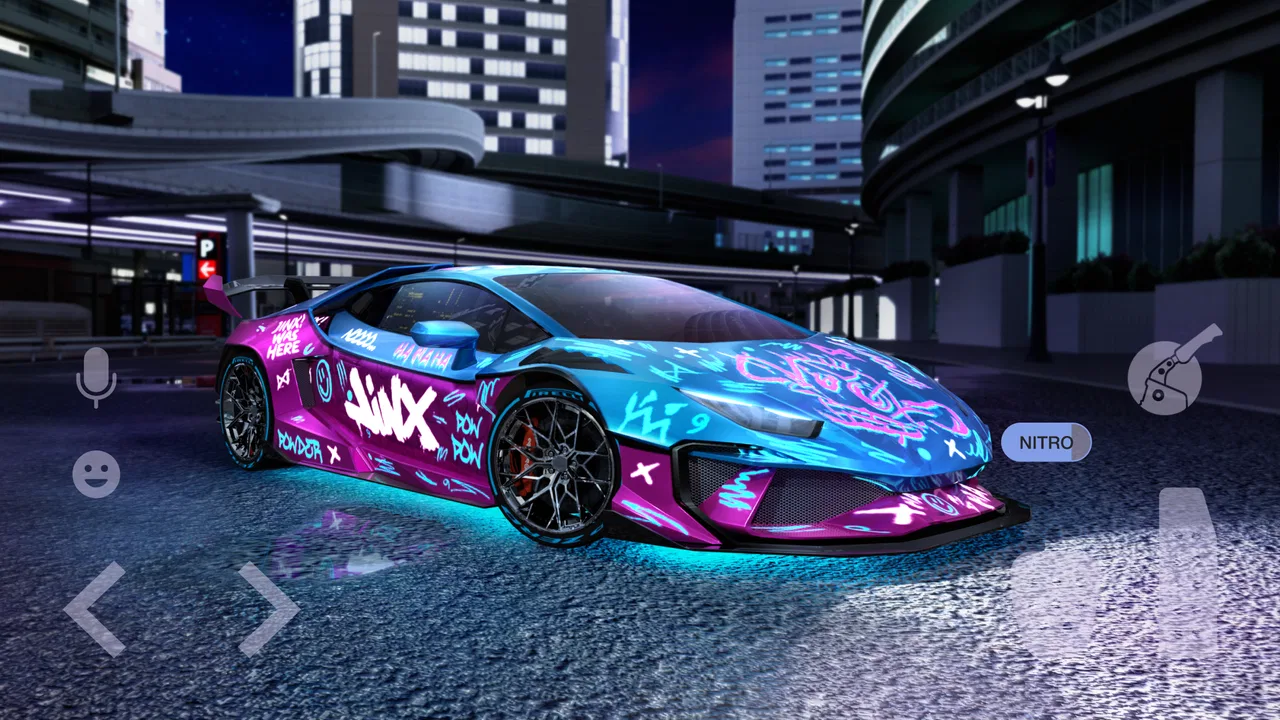
Tuning Club Online: Car Racing
- 4.6
- Rating
- 10.00M
- Installs
- Free
- Price

 Analysis by App-foxy
I went into Tuning Club Online: Car Racing expecting a straightforward mobile racer, but its strongest appeal is more specific: it wants me to spend time with the car itself. The driving, visual style, tuning focus, drifting, and stunt-oriented events all point toward a relaxed street-racing fantasy rather than a serious simulation. I can jump in for a short session, adjust the feel of a car, and chase a cleaner run without needing to treat every race like a championship campaign.
That makes it easy to recommend to someone who enjoys customizing cars as much as crossing the finish line. It is a free racing game from Two Headed Shark DMCC, rated for Everyone, and its broad audience is reflected in the fact that it has passed ten million installs. At the same time, the free-to-play structure matters: optional purchases range from $2.99 to $89.99 per item, so I would approach progression with the expectation that the game may encourage spending rather than simply handing over every desirable upgrade.
My overall impression is positive, but not uncritical. This is not the choice I would make for realistic handling, deep motorsport strategy, or a quiet single-player experience. It is better suited to players who want colorful car culture, quick action, and the satisfaction of making a vehicle feel more personal. The atmosphere does a lot of the work, while the driving gives that atmosphere a reason to exist.
You May Also Like

 Blood Strike: 2.5 Anniversary
Blood Strike’s Loadouts Turn Every Drop Into a Tactical Gamble
A close look at Blood Strike’s custom loadouts: how fast access to signature weapons reshapes its battle royale rhythm, rewards preparation, and narrows the gap between fights.

 Pandora - Music & Podcasts
Pandora’s Music Is Easy to Start, but Harder to Recover
Pandora’s strength is its low-effort path from a seed to a station. Its weak spot is how much confidence it asks you to place in connection, setup, and quiet recovery.

 8 Ball Pool
 Is Built on Rivalries, Rematches, and Routine
A close look at the rivalries, rematches, shared routines, and unanswered safety questions that turn a quick pool match into a persistent mobile community.

 Samsung Music
’s Quiet Strength Is Playing What You Already Own
Its reach comes less from spectacle than from dependable access to a personal library. That simplicity is both the app’s strongest retention engine and its ceiling.

 AccuWeather: Weather Radar
AccuWeather Review: A Quick, Clear Forecast for Everyday Decisions
For everyday plans, the best forecast is the one you can understand quickly. AccuWeather makes rain timing, radar, and local conditions easy to act on, with a few trade-offs.

 Hill Climb Racing
Why Hill Climb Racing Still Turns Crashes Into One More Run
A tiny car, a bumpy hill and one more upgrade: Hill Climb Racing keeps resurfacing because its simple chaos makes every near-miss feel personal.
More From Our News Desk



A street-racing mood built for quick sessions
I like how the game makes a short drive feel like a chance to try something, not just another race to finish. A useful way to get more from those quick sessions is to pick one small goal—hold a cleaner line, recover from a slide, or test a single tuning change—so each return teaches you something before the broader car-focused loop comes into view.
The first minutes communicate the right idea
The game’s identity is clear from the way it combines racing with drifting, tuning, and stunt driving. Instead of presenting the car as a neutral tool, it treats the vehicle as the center of the experience. That distinction changes how I play. I am not only asking whether I won; I am also noticing whether the car feels easier to control after an adjustment, whether a corner invites a longer slide, and whether a stunt is worth attempting when a safer line would be faster.
This makes the opening impression more approachable than a demanding simulator. A new player can focus on the basic pleasure of moving quickly through a street-racing setting, while a more committed player has reasons to keep experimenting. The game does not need to be realistic to feel engaging. Its appeal comes from making the car expressive: the way it turns, slides, accelerates, and looks becomes part of the reward.
I also like that the concept supports different moods. I can play carefully and aim for a clean route, or I can treat a session as a playground for drifting and stunts. Those two approaches do not always agree mechanically. A flashy move can cost time, and an aggressive drift can turn into a mistake. That tension gives the action more personality than a simple accelerate-and-steer loop.
Who will settle in quickly
I think the best audience is someone who enjoys arcade-style racing with a strong customization angle. If you like comparing cars, trying different setups, and learning how a vehicle responds to your habits, the game has a satisfying loop. It is also a natural fit for short breaks because the central activity is immediately understandable: drive, improve, and try again.
It is less convincing for players who want a carefully modeled racing discipline. Someone looking for authentic track etiquette, detailed motorsport rules, or the measured pace of a simulation should choose a different kind of game. The same applies if you dislike free-to-play economies. Even when the driving itself is enjoyable, the surrounding progression can feel less comfortable if you prefer every meaningful improvement to come purely from play.
The Everyone age rating also makes the presentation broadly accessible. I would still describe the game as aimed at people who enjoy car culture and arcade competition rather than very young children specifically, because understanding tuning choices and developing control through corners are central to getting the most from it.
How the visual language supports the fantasy
The art direction works because it does not fight the game’s mechanical goals. A street-racing world built around customized cars needs to make the vehicle easy to read and enjoyable to look at. The emphasis on distinctive cars and expressive driving gives each run a sense of style, even when the underlying task is familiar. I find that important on a phone, where a race needs to communicate its mood quickly rather than slowly build a realistic sporting atmosphere.
The setting feels designed as a stage for motion. Roads, corners, jumps, and open spaces become opportunities to show what a car can do. That is why the stunt element belongs here instead of feeling like a separate minigame. The environment is not merely scenery behind the vehicle; it encourages me to look for lines that are entertaining as well as effective.
There is a useful trade-off in this approach. A highly stylized presentation can make a game more inviting, but it may not satisfy players who want the visual weight and precision of a serious racing simulator. Here, clarity and attitude matter more than strict realism. I prefer that choice because it keeps the game coherent, although it means the experience depends heavily on whether the player enjoys its street-racing fantasy in the first place.
Cars as visual and practical identities
Tuning is more meaningful when it changes how I think about a car, not just how it looks. In this game, customization gives me a reason to develop preferences. One vehicle may feel comfortable for controlled cornering, while another may encourage a more reckless approach. Even without turning the experience into a technical workshop, the possibility of shaping a car helps the garage feel connected to the races.
My practical advice is to avoid changing everything at once. When I adjust several aspects together, it becomes difficult to tell which change actually helped. A better workflow is to use one car for a while, notice where it loses time or control, then make a focused adjustment and test it in similar situations. That turns tuning into a small experiment rather than a hunt for a universally best setup.
This is one of the game’s less obvious strengths: it can reward observation. I do not have to be an expert mechanic. I only need to notice whether I regularly overshoot corners, struggle to hold a drift, or lose momentum after a stunt. Those observations provide a practical basis for choosing how to refine my car.
Sound and the feeling of speed
Sound has an important job in a racing game that leans on mood. The visual presentation tells me that this is a lively street-racing playground, while the audio should keep the action from feeling weightless. I pay attention to the rhythm of acceleration, cornering, and impact because those cues help me feel when a run is building momentum and when it has gone wrong.
The game’s sound design is most effective when it supports concentration without overwhelming it. Racing requires quick reactions, and I need to distinguish the excitement of a successful move from the warning signs of a poor line. When the audio and visual feedback arrive together, a drift feels like an intentional action rather than an accidental slide.
I would not describe the sound as the sole reason to play, but it contributes to the game’s coherence. The experience is not trying to create a quiet, meditative drive. It wants movement, attitude, and a sense that every corner can become a small performance. That rhythm also makes repeated attempts easier to tolerate: even when I fail, the run still has energy.
Pacing that works in short bursts
The pacing is one of the clearest reasons this game fits mobile play. A quick session can focus on a single race, a tuning decision, or a few attempts to improve a difficult section. I do not need to reserve an entire evening to enjoy the core loop. That matters in an everyday situation: if I have a short wait before an appointment, I can play for a while, stop, and return later without needing to rebuild a complicated mental state.
At the same time, the fast rhythm can expose the limitations of the format. Players who want a slow, deliberate progression may find the repeated cycle of driving, adjusting, and retrying less satisfying over time. The game’s energy is an advantage when I want immediate action, but it can become tiring if I am looking for a more varied campaign structure or a strong narrative reason to continue.
I also think the pacing makes mistakes feel different from mistakes in a simulator. In a realistic racer, a small error may ruin a carefully planned lap. Here, failure is easier to accept because the game encourages another attempt and treats driving as experimentation. That is friendlier, though it can reduce the sense of long-term consequence for players who enjoy high-stakes competition.
Where the mechanics fit the atmosphere
The central mechanics fit the visual and audio direction because they all reinforce the same fantasy. Drifting makes corners expressive, tuning gives the car a personal identity, and stunts turn the environment into something to interact with rather than simply pass through. None of these elements feels completely isolated from the others. A car that is fun to control makes a visual stunt more satisfying, while a distinctive setting gives the stunt a reason to exist.
The main trade-off is that spectacle can compete with efficiency. If I am chasing the fastest result, I may choose a conservative line instead of the most entertaining one. If I am playing for style, I may accept a slower route because the move looks and feels better. That choice is healthy for the game because it lets me define success for myself, but it also means players who want a single, objective competitive standard may find the experience less focused.
For newcomers, I recommend learning control before worrying about perfect customization. It is tempting to spend time in the tuning side immediately, but a better car cannot replace familiarity with braking points, corner entry, and recovery after a mistake. Once I understand my own driving weaknesses, tuning becomes more useful and less random.
Free access and the cost of commitment
The game is free to download, which lowers the barrier to trying its driving style. That is valuable because the appeal is quite personal: some players will enjoy the combination of street visuals, drifting, and car adjustment immediately, while others will find it too arcade-focused. Trying it without an upfront price makes that decision easier.
The presence of in-app purchases changes how I would approach long-term progression. Individual items are priced from $2.99 up to $89.99, so I would not begin with the assumption that every car or improvement should be obtained quickly. My advice is to play first, decide whether the handling and atmosphere genuinely hold your attention, and only then consider spending. If the game starts making progress feel like a shopping task rather than a driving challenge, that is a good point to step back.
This economic structure is also why the game may not suit someone who wants a completely predictable racing experience. A paid game with a fixed progression path can be easier to evaluate as a whole. Here, the free entry is attractive, but the player needs to set personal limits and judge whether optional purchases add enjoyment rather than pressure.
Technical entry point and everyday practicality
The listed minimum operating-system requirement is Android 7.0, which gives the game a relatively broad starting point for Android users. The current version is 2.7375, so I would keep the app updated when possible, especially if I plan to make it a regular part of my gaming routine. For a practical test, I would first play a few short sessions rather than immediately committing to a long progression goal.
That approach answers an important everyday question: will it work as a casual game or demand constant attention? In my view, it works well casually because the core pleasure is repeatable. I can use a spare moment to practice a corner, test a car adjustment, or simply enjoy a fast run. Players who want a more serious long-term project should spend more time deciding whether the free-to-play structure and repeated attempts provide enough depth for them.
How it compares with other mobile racers
Compared with realistic racing games, this one places less emphasis on authentic driving discipline and more on expression. I would choose it when I want drifting, visual attitude, and stunt-friendly roads. I would choose a simulation-oriented alternative when I want carefully measured braking, formal racecraft, and a stronger feeling that the car is being modeled as a real machine.
Compared with simpler arcade racers, it offers more reasons to care about the vehicle beyond the next race. The tuning and customization focus give me a stronger sense of ownership than a game where cars are mostly temporary tools. The compromise is that the extra systems can make the experience feel more involved, particularly for someone who only wants instant racing with no decisions in the garage.
It also sits differently from narrative-driven racing games. There is less need for a story to justify the next event because the attraction is the driving loop itself. That is a benefit if I want to create my own goals, such as improving a route or finding a comfortable setup. It is a weakness if I need characters, plot, or a campaign structure to keep me invested.
Small habits that improve the experience
I found three habits especially useful. First, I treat every tuning change as a testable hypothesis: I identify one problem, change one relevant aspect, and drive again. Second, I separate practice runs from result-focused runs. During practice, I experiment with lines and stunts; during result attempts, I remove unnecessary risks. Third, I use the sound and visual rhythm as feedback instead of relying only on the finish position. A run that feels smoother can reveal progress even before the result clearly shows it.
Another useful trade-off is deciding when not to drift. Drifting is part of the game’s personality, but it is not automatically the best answer for every corner. If I enter too aggressively, the slide may look impressive while costing speed or control. Learning to reserve a drift for corners where it actually helps makes the mechanic feel more deliberate and turns style into a skill rather than a button habit.
I would also avoid comparing every car directly against the same ideal. A vehicle that is awkward for one route may be enjoyable on another because its behavior encourages a different rhythm. That mindset makes the garage more interesting and reduces the temptation to discard anything that does not feel immediately perfect.
The atmosphere verdict
After spending time with it, I see this as a mood-driven racer with enough mechanical substance to support the mood. The street setting, car-focused presentation, drifting, tuning, stunts, and energetic pacing all point in the same direction. The game is at its best when I stop treating it as a pure test of speed and start treating each run as a short piece of car control and visual performance.
Its limitations are equally clear. The free-to-play economy may bother players who dislike optional spending, the arcade approach will not replace a realistic simulator, and the repeated driving loop may not satisfy anyone looking for a story-heavy campaign. I would skip it if my priority were authentic motorsport or a fixed-price experience with no progression pressure.
For everyone else, especially players who like making a car feel personal, it is an easy game to try. Two Headed Shark DMCC has built something that understands the appeal of street racing as a lifestyle fantasy: the car looks distinctive, the road invites improvisation, and the best moments come from finding a line that feels good rather than merely safe. With a 4.7 average from around 337 thousand ratings, its broad appeal is understandable, but my recommendation still comes with one condition: play for the driving mood first, and treat spending as optional rather than necessary.
FAQs for Tuning Club Online: Car Racing
01What is Tuning Club Online: Car Racing?
Tuning Club Online: Car Racing is a multiplayer racing game that allows players to customize and race cars against others online. It features real-time racing, extensive car tuning options, and various modes and tracks to keep players engaged. Available on both Android and iOS, it offers a thrilling experience for car enthusiasts.
02How can I customize my car in Tuning Club Online?
In Tuning Club Online, you can customize your car with a wide range of tuning options. Players can modify engine performance, adjust suspension, change tires, and enhance the car's appearance with paint jobs and decals. This allows for a personalized racing experience, catering to both aesthetic and performance preferences.
03Is Tuning Club Online free to play?
Yes, Tuning Club Online is free to download and play. However, it offers in-app purchases that can enhance your gaming experience. These purchases may include premium cars, special tuning parts, and cosmetic items. Players can still enjoy the game without spending money, but these options can offer additional benefits.
04What are the system requirements for Tuning Club Online?
To run Tuning Club Online smoothly, Android users need a device with at least Android 5.0, while iOS users require iOS 10.0 or later. A stable internet connection is essential for online racing. Additionally, having a device with good processing power will ensure a more seamless gaming experience, especially during intense races.
05Can I play Tuning Club Online with friends?
Absolutely! Tuning Club Online allows you to race against friends in real-time multiplayer mode. You can create or join rooms to compete with friends or players worldwide. This feature enhances the social aspect of the game, making it not only about racing but also about building a community of car enthusiasts.
Pros
- Real-time multiplayer races add excitement.
- Extensive car customization options.
- Regular updates with new features and cars.
- Smooth graphics and engaging visuals.
- Active community and support for players.
Cons
- In-app purchases can be costly.
- Requires a stable internet connection.
- Learning curve for new players.
- Occasional server connectivity issues.
- Limited offline gameplay options.

Tuning Club Online: Car Racing
Gallery